
Future-Proofing Single Cell Applications
Now Watching Technology has evolved from those early days of batching thousands of cells together to decrypt the millions of base pairs that make up genetic information. Cellular Indexing of Transcriptomes and Epitopes by sequencing (CITE-seq), brings together surface protein phenotyping (similar to flow cytometry) and single-cell RNA sequencing (scRNA-seq). This is achieved by using […]
Longitudinal single-cell analysis of SARS-CoV-2-reactive B cells uncovers persistence of early-formed, antigen-specific clones
READ PUBMED When the body encounters a pathogen, such as a virus, the immune system develops an adaptive immune response through B-cell and T-cell responses to clear the infection and develop memory to this pathogen. This memory, often referred to as “immunological memory,” allows the body to respond more rapidly and specifically if it faces […]
Overcoming challenges of Nuclei and Cell Preparation: A scientific perspective by S2 genomics and Curiox Story

Now Watchinghttps://youtu.be/inLymDAn4EI Single-cell transcriptome analysis has been extensively applied in humans and animal models to uncover gene expression heterogeneity between the different cell types of a tissue or an organ. Upstream processing may introduce inherent challenges that mask true analysis and increase user variability. Here we present a simple, yet combinatorial strategy from buffer and […]
Impact of Novel Curiox Laminar Wash on Nuclei Retention and Other Downstream Applications

Now Watching Cell type-specific nuclei populations can be used for a wide range of downstream sequencing applications including transcriptomic and epigenomic analyses. Cerevance’s breakthrough use of Laminar Wash™ Technology in their proprietary NETSseq platform has enabled an improvement in nuclei retention as well as reagent cost reductions and time savings. This Labroots Webinar features David […]
White Paper: The Cell Analysis Conundrum, Garbage In/Garbage Out
Comprehensive Benchmarking of CITE-seq versus DOGMA-seq Single Cell Multimodal Omics
READ BIORXIV While single-cell multiomics techniques represent a growing dictionary for generating enormous insight into cell biology, objective assessments of utility, strengths, and weaknesses are lacking. Researchers at the the University of Pittsburgh compared trimodal (transcription, epitopes, and chromatin accessibility) DOGMA-Seq to bimodal (transcription and epitopes) CITE-seq to benchmark and optimize sample prep using Laminar […]
Enabling Single-cell Multiomics and Cell Hashing in Studies with Limited Numbers of Cells

Now WatchingWebinar: Making single-cell ‘omics studies possible when starting cell counts and budgets are limited Our October 19, 2021 webinar featured University of Gothenburg Associate Professor of Immunology Mats Bemark, Ph.D. and Curiox Biosystems Marketing & Content Manager, Geoffrey Feld, Ph.D. Dr. Bemark studies mucosal immunology, with particular focus on the gut and gut-related infections like cholera, […]
Nuclei Need Nurturing, Too
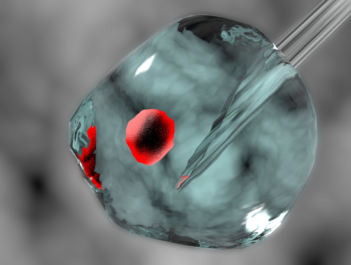
Laminar Wash™ benefits of automation and gentle cell-based sample preparation can also be extended to nuclei Analytical methods on individual cells provide an enormous amount of useful information. But not all tissue types lend themselves to preparing single cell suspensions necessary for flow cytometry or single-cell ‘omics analysis. Homogenization and dissociation of interconnected tissues […]
Next Generation Solution to Quality and Efficient Sample Prep for Single-Cell Multiomics Precision Oncology
Now WatchingWebinar: Standardizing and improving the workflow for precision oncology tumor sample prep Our July 27, 2021 APAC webinar featured Proteona Chief Science Officer Jonathan Scolnick, Ph.D. and Curiox Biosystems Associate Director of Bioapplications, Chyan Ying Ke, Ph.D. Proteona is a precision oncology company that developed a single-cell multiomics data collection and interpretation pipeline which informs on […]
A Missing Sample Prep Tool for Single-Cell Biology is Found
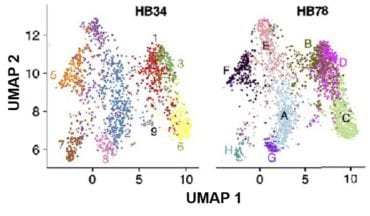
Gentle and semi-automated Laminar Wash™ technology removes background, debris, doublets, and dead time, extending single-cell ‘omics budgets. Single-cell ‘omics technologies are achieving a new paradigm in biology. As Eadweard Muybridge applied photography to settle the “unsupported transit” controversy surrounding the 19th century galloping horse, immunologists are utilizing single-cell transcriptomics (scRNA) to tease apart the heterogeneity […]