Reliable Multiplex Immunoassay Data from Miniaturization
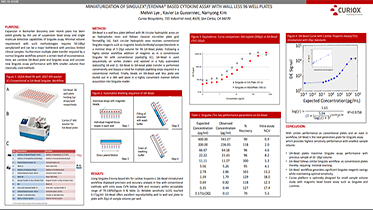
Miniaturization with the DA-Bead systems and plates reduces sample volume and bead consumption by 5X and decreases assay costs by >60%. Laminar flow washing is efficient and limits bead aggregation.
MORE DATA POINTS USING LESS SAMPLE AND REAGENTS. SIGNIFICANT SAVINGS.
A 5-fold miniaturization reduces total assay costs by 60–80%. The Curiox DropArray™ LT210MX Washing Station (DropArray station) allows 5x more wells to be run from a single assay kit Multiplex bead-based immunoassays are robust and generate highly sensitive data from a variety of samples types. However, these assays are costly and involve expensive reagents and often valuable samples. The DropArray station allows users to analyze the same number of analytes at a fraction of the cost and sample consumption. The DropArray station use 5-fold smaller volumes, so the same amount of reagent can produce 5x more data points.
“The DA-Bead method for analysis was comparable to, if not superior to, the conventional method in terms of consistency/precision, accuracy, sensitivity and dynamic range.”
Prof. Beaumier at Baylor College of Medicine and Dr. Biswas at Merck
BUILT FOR PURE PERFORMANCE
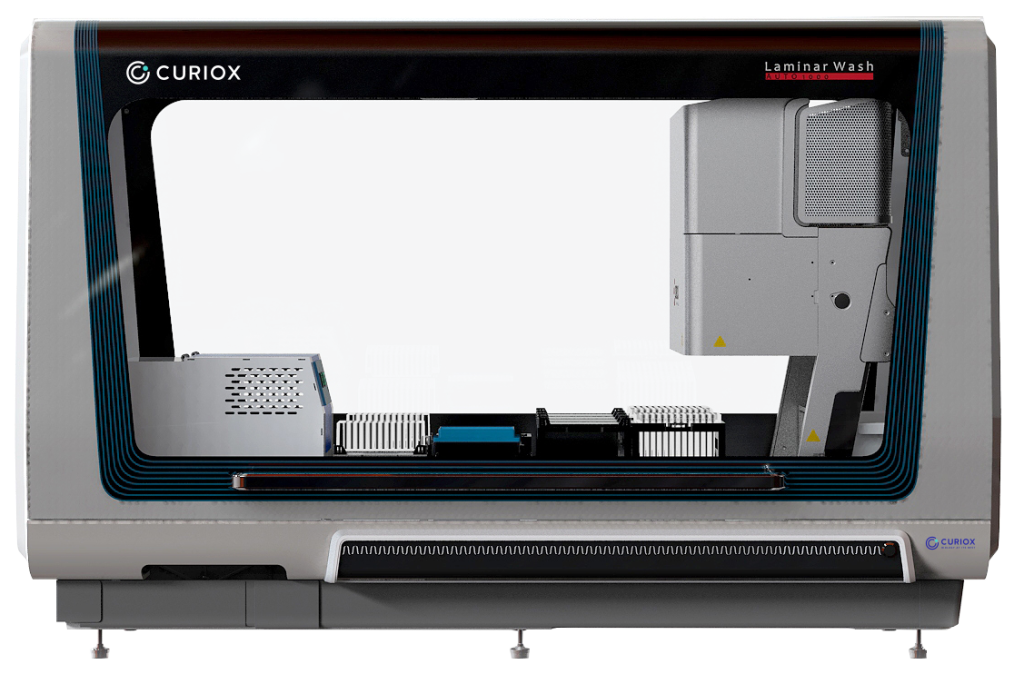
Washing Stations accept DropArray DA-Bead and DA-HCS plates into a liquid-tight chamber formed with a clamping mechanism. After an aqueous washing buffer is automatically added, the station gently shakes the microplate to facilitate washing with minimal loss of cells. The station then tilts the microplate, using gravity to drain the excess washing buffer from the planar surface, avoiding the harsh, high-velocity liquid exchange associated with traditional washers and microplates. Buffer is added at a very low velocity, preventing cell and bead loss. In addition, there is a magnet array embedded in the plate holder for bead-based immunoassays. This helps retain magnetic beads on the microplate upon washing. Despite the low velocity, plate processing time is comparable to traditional washers because the entire plate is treated at once. After the microplate is removed from the station, the plate is ready for accepting the next set of reagents.
DATA USING THE DROPARRAY SYSTEM
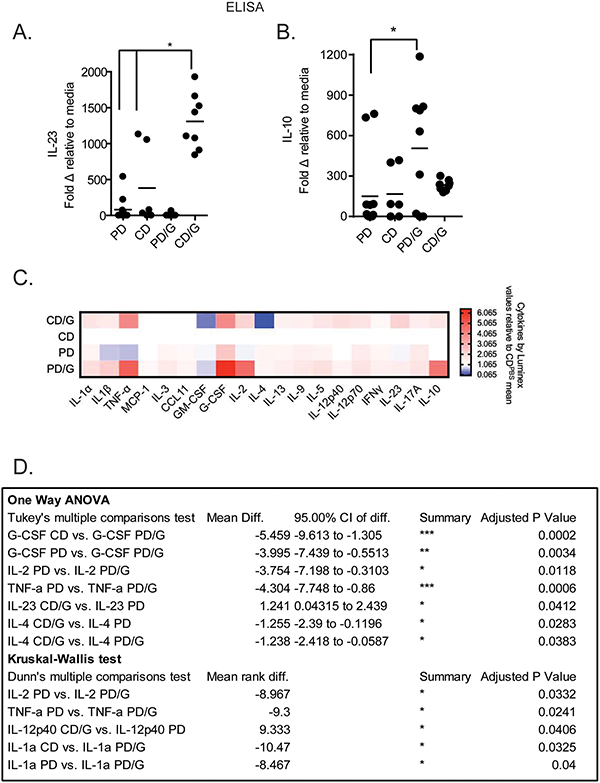
Giardia infection during protein deficiency and sufficiency influences cytokine production
Cytokine production by BMDCs in response to endotoxin is altered during giardiasis in a diet dependent manner. Bone marrow cells were harvested from male C57BL/6 mice on a control (CD) or protein deficient diet (PD) that were challenged (CD/G, PD/G) or free of Giardia lamblia (CD, PD). Cells were cultured in RPMI with 10% FBS, supplemented on days 0 and 3 with GM-CSF (10ng/mL; Peprotech), and harvested on day 6. 2.5×10⁵ cells were plated per well of a round bottom 96-well dish, and treated with cell culture media or LPS for 24h. Cytokine levels in the supernatants were determined by ELISA (A, B) and Luminex (C, D). For ELISA data, values in (A, B) represent fold change of cytokines after LPS treatment (1mcg/mL) compared to unstimulated media control. . = p<0.05 One-Way ANOVA with Tukey post-test. For Luminex data, Cytokine values were normalized using fold-change relative to the mean value of the control group (C, D) for each cytokine and then compared using One-Way ANOVA, Kruskal-Wallis and Tukey or Dunn’s post-test (D), p-value is as reported in D. A,B N = 6–12 mice, C,D n = 3–6 mice.