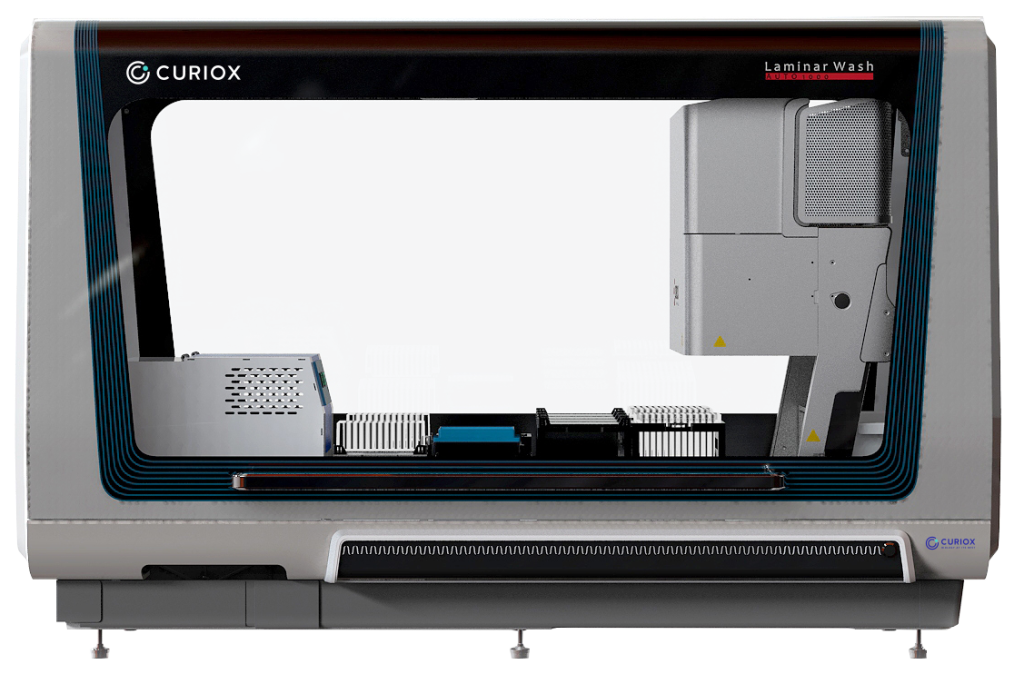
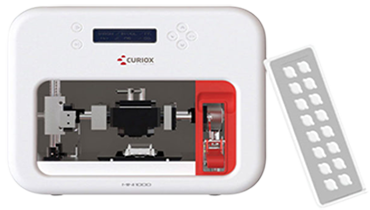
AUTOMATE FLOW CYTOMETRY SAMPLE PREPARATION WITH LAMINAR WASH TECHNOLOGY
Get fast, consistent results with higher cell retention, increased resolution and superior data quality.
Technology
Automated cell preparation by Laminar Wash yields cleaner and clearer data for flow cytometry
Benefits
Fast, reproducible results with increased cell retention and viability leads to superior data quality
Scientific Data
See examples of enhanced cell retention, improved reproducibility
and time savings
Resources
Publications and other useful links
Overview
UPGRADE HOW YOU PROCESS CELLS TO GET RELIABLY CONSISTENT DATA
Laminar Wash technology is for scientists who believe that quantitative flow cytometry is critical to cell therapy, immuno-oncology, and other fields where cell analysis is important.
Flow cytometry depends on data consistency and reproducibility to yield biologically relevant information. Yet traditional sample prep methods often fail to deliver on these key criteria. How can we address this challenge?
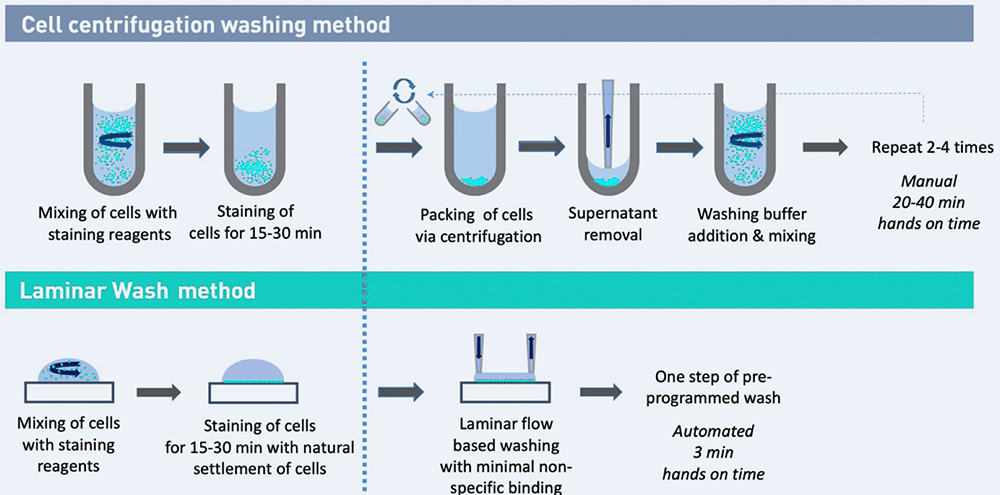
By moving away from centrifugation, the traditional way of processing your cells, and automating your flow cytometry workflow, from sample preparation to data analysis using laminar washing. This process allows for standardization of sample preparation methods for various cell analysis applications.
Laminar Wash technology significantly improves debris removal, increasing the retention and viability of rare cell populations. The distinct resolution and identification of target and rare cellular populations supports the gamut of therapeutic development, from biomarker identification and discovery, to predicting cellular expansion success during manufacturing.
By eliminating centrifugation and supernatant removal steps (e.g., aspirating and flicking), Laminar Wash reduces sample handling and hands-on time, freeing your lab to take on more challenging endeavors.
If you’re interested in obtaining the most reproducible data among users and locations, then Laminar Wash technology is for you.
“Due to its underlying principle, the Laminar Wash (technology) means less mechanical stress on cells and less cell loss from a sample that is compared to conventional centrifugation steps.”
Dr. Christoph Eberle, Charles River Laboratories
TRADITIONAL
WORKFLOW
VS
LAMINAR FLOW
TECHNOLOGY
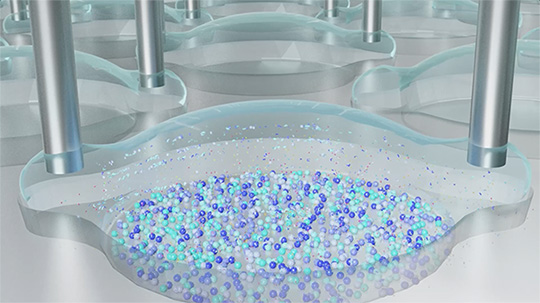
With the Laminar Wash technique, cells undergo a gentle wash without added stress, this enables >95% cell retention and results in superior data quality over microtiter plates/centrifugation
Towards standardizing flow cytometry sample preparation
EFFORTS TO STANDARADIZE FLOW CYTOMETRY
EuroFlow
EuroFlow consists of 20 expert academic research centers and one industry group in the fields of flow cytometry and molecular diagnostics. Their aim is to create protocols that will standardize quantitative flow cytometry for diagnostic applications. Their website presents several published protocols and other useful references, which you can access at the link below.
NIST (National Institute of Standard and Technology)
This United States government organization has a program on quantitative flow cytometry measurements that develops reference materials, methodology, and procedures enabling quantitative measurements on cells. Curiox joined this consortium in September of 2021 to support standardization in cell and gene therapy manufacturing.